Did ordinary medieval Europeans know more plants than we do?
Author’s Note: When I first started investigating the answer to this question, I only had an inkling of how broad the answer may be. I could write an entire book based solely on this question alone. Instead of attempting that huge endeavor, I’m instead sharing a general overview. I plan on diving into more specific questions later!
Today, we know an extraordinary amount about plants. We can order seeds from across the globe, identify species using our phones, and even reproduce plants in laboratories. And yet, many struggle to identify the species growing in our own backyards. We possess a profound amount of botanical knowledge, but our cumulative lived knowledge of plants is fading. Our understanding of the plants and animals around us has been steadily diminishing, especially in urban areas. Researchers have been studying a phenomenon called plant blindness, or the inability to notice plants in one’s own environment(1), as a means to understand our cultural shift away from the natural environment.
Medieval Europeans were required to have more lived knowledge of plants as a means for survival. While many people today are hobbyist gardeners, in medieval Europe, it was essential to understand both plants used for cultivation and native plants, which were used for a variety of purposes.
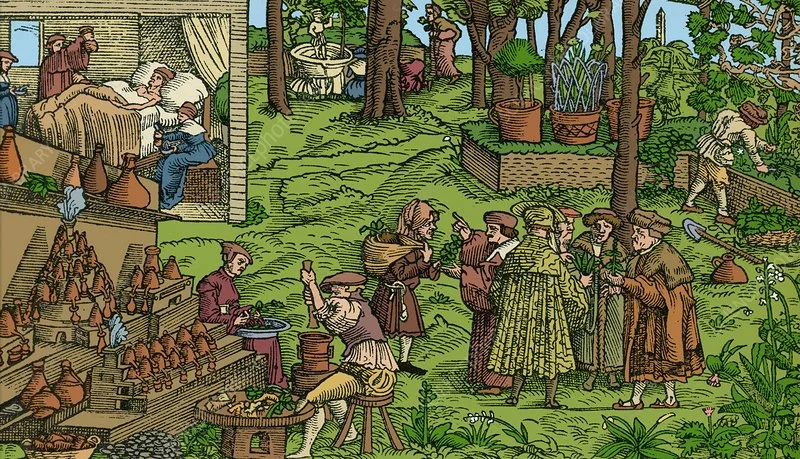
Caption and Photo Courtesy of Science Photo Library: Adam Lonicerus (Lonitzer) city physician at Frankfurt-am-Main, had this woodcut made for his 'Herbal' of 1578. Above, the woman herbalist is fetching the officinal herb from the wood; on the right, the gardener is clearing a fitting space in the garden for this indigenous plant next to the highly cultivated foreign ones. In the middle, it comes into the hands of science and becomes a subject for discussion by learned scholars (fur coats). Then the hour of sacrifice comes for the plant. Distillation, equipment stands in rows on shelves-- heated from above. Top left, doctor examines a patients' urine at the sick bed prior to describing the drug.
Who knew medicinal plants?
Historically, did all people know and understand plants, or was it specialized knowledge? When ethnobotanists visit villages still practicing a traditional way of life, they often speak with leadership or medicine men and women to understand that culture’s use of local plants. In books whose premise is based on European folklore, it is often a witch or old medicine woman tucked deep into the dark woods who knows the magic of certain plants. After all, the average villager wouldn’t know the plant world’s obscure secrets.
When it comes to medieval Europeans though, the answer is, it’s a bit of both. The medieval period, or the Middle Ages, refers generally to an era between the fall of the Roman Empire (circa 500) to the beginning of the Renaissance period (circa 1500)(2). During this time, the Roman Catholic Church dominated European worldviews, particularly affecting the belief systems surrounding medical knowledge. Medicine and superstition became intermixed and the advancement of medical knowledge began to slow, relying heavily on earlier Greek and Roman knowledge passed down from texts and memory(3).
The keepers and administrators of most plant knowledge and medicinals were monks. Monasteries kept medicinal gardens for experimentation but also to tend to the sick. Much of their plant knowledge was gleaned from earlier texts, again relying on early Greek and Roman knowledge to guide their healing. During this time, there were also professional physicians, surgeons and barber-surgeons, as well as apothecaries who all played a role in medical practice(4). In rural areas, home remedies were common, but formal apothecaries or less-formal grocers and mercenaries, also grew and acquired medicinal plants. Back then, it truly was a ‘jack-of-all-trades’ experience when it came to goods and services.
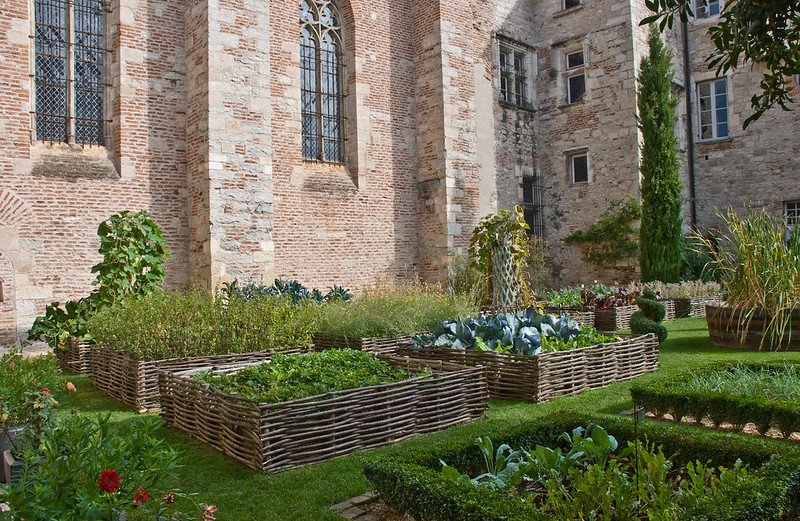
Photo of a medieval-inspired garden behind Cahors Cathedral, known as Le Courtil des Moines (the Monks' Vegetable Garden), part of the city's network of Secret Gardens. Courtesy of Star of Nature.
Who knew plants grown for food?
The medieval period had a strange blend of folklore, superstition, and established medical practice guiding their use of plants. But, plants weren’t just used as medicine. Of course, the agricultural use of plants was integral to the still-agrarian society they lived in. Most people living during the Medieval period were peasant farmers, growing mainly rye, oats, peas, and barley(5). It has been suggested by numerous sources that up to 90% of people living during this time were farmers who may have also held jobs such as blacksmithing, carpentry, and miscellaneous work demanded by property-owning lords. It was a difficult life.
Today, farm and ranch families only comprise about 2% of the United States’ population(6). Looking at percentages of the population alone, it is easy to gather that more people during the Middle Ages worked with plants and crops than people living in the post-industrial modern world. While agrarian societies still exist, mainly in Africa and Asia(7), globally the amount of agrarian societies have diminished.
Just from looking at these statistics, it is easy to gather that most medieval Europeans had a more intimate knowledge of plants grown for food than most people living today. Modern farmers are more specialized in what they grow, yet most farms across the US still grow three or more crops(8). While medieval Europeans also grew a few staple crops, smaller family gardens were also maintained by most families. Those smaller family gardens typically held an assortment of herbs, such as parsley, chives, and sage, and salad greens such as spinach, lettuce, and borage for fresh eating and drying(9).
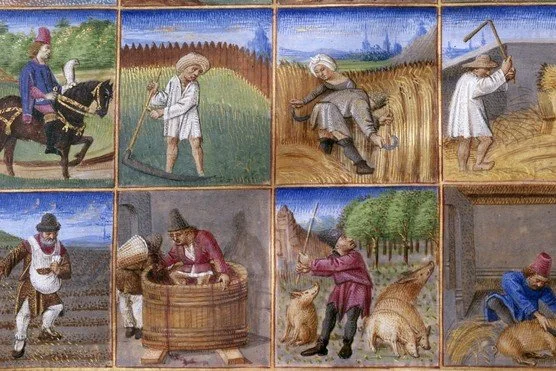
Photo of farmers working the land and completing chores. Courtesy of History Extra.
Did a farmer need to know non-crop plants even if they weren't a “herbalist”?
As we’ve covered already, most medieval Europeans were farmers. Most households grew food as a means for survival, so having an intimate knowledge of all plants was vital. Just like modern farmers, medieval Europeans had to identify plants that could harm or kill livestock, such as hemlock, and they had to identify weeds and their growth cycles in order to minimize weed pressure and boost harvests.
Most households had a general understanding of ‘folk herbalism’ and could use plants such as yarrow to help treat minor cuts or use plantain leaves to soothe irritated skin. It was also important to understand what was edible during times of famine or food supply shortages. Plants such as dandelion and wild garlic could supply essential vitamins and stave off hunger during the early spring. While an herbalist might have specialized and deeper knowledge of plants and their medicinal uses, the average medieval peasant utilized many non-crop plants for survival.
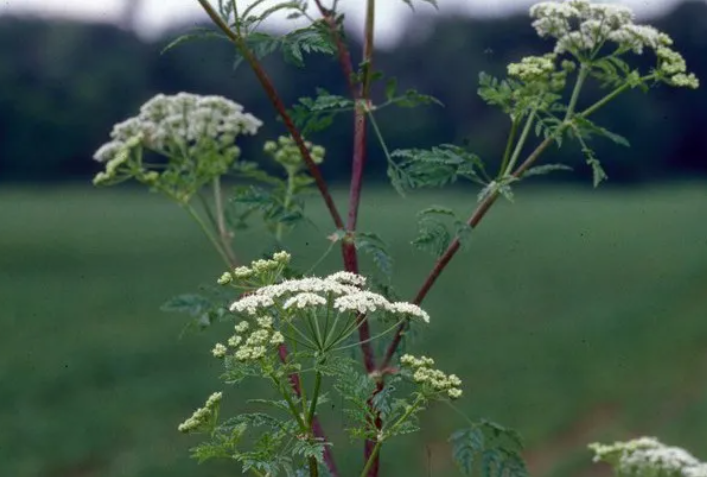
Photo of poison hemlock or Conium maculatum. Courtesy of Penn State Extension https://extension.psu.edu/poison-hemlock.
Was knowledge divided by occupation, gender, class, region, or household role?
As discussed earlier, there were several formal occupations that surrounded the use of medicinal plants. Occupations such as physician or surgeon required specialized knowledge and years of schoolwork, so those occupations were largely set aside for higher-ranking men. Most physicians would use early texts called ‘herbals’ to guide their practice. Medieval herbals were books that assisted physicians and apothecaries with information on identifying and collecting plants, as well as provided instructions on medicinal preparations. However, not many people had access to herbals, and these texts were often kept in the hands of elite men.
Most of the information collected in herbals was gathered from folk medicine. Folk medicine largely relied on oral tradition, with knowledge being passed down from generation to generation. Women were relegated to the household, where they were skilled cooks with a deep knowledge of herbs and vegetables. Women were also expected to have a basic understanding of medicinal plants for treatment at home, but unlike men, women were not allowed to practice any medical treatment outside the home(10). The knowledge of tending the household would then be passed from mother to daughter.
Urban Europeans also required a rather intimate knowledge of plants. Many urbanites also gardened, as it was essential to still maintain some of their own food supply. While rural Europeans worked with plants more often, the typical urban European also had a solid understanding of plants.
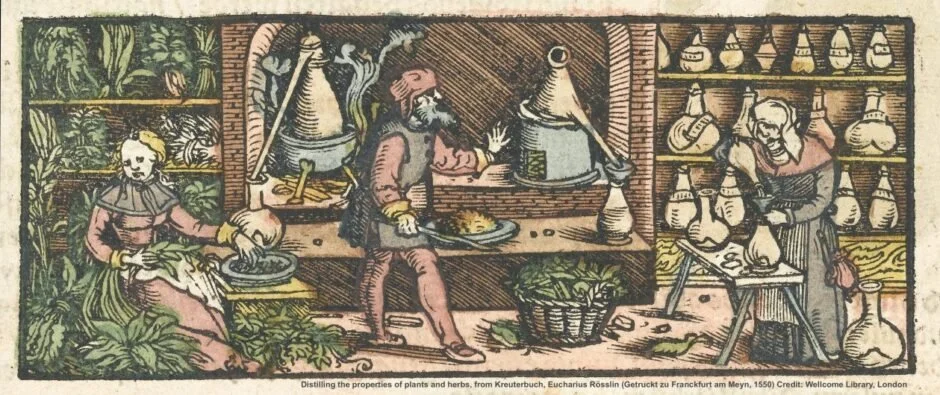
Photo Original Caption: Distilling the properties of plants and herbs, from Kreuterbuch, Eucharius Rosslin (Getruckt zu Franckfurt am Meyn, 1550) Credit: Wellcome Library, London.
Courtesy of Herbal History Research Network.
But did every medieval person actually know plants? Probably not.
Urban Europeans, for example, had very different relationships with plants than rural agricultural households. A wealthy landowner didn't necessarily have the same practical knowledge as the person working his fields. A physician possessed specialized knowledge that a farmer might not. An apothecary had knowledge the average household probably didn't.
As you can tell, the question, “Did ordinary medieval Europeans know more plants than we do” is pretty nuanced. It’s safe to say, in general, most of them did know more plants than we do today. While I don’t find it necessary for modern people to have such an intimate knowledge of plants as our ancestors, it is important to have a basic understanding of where our food comes from and the roles that plants play in our lives.
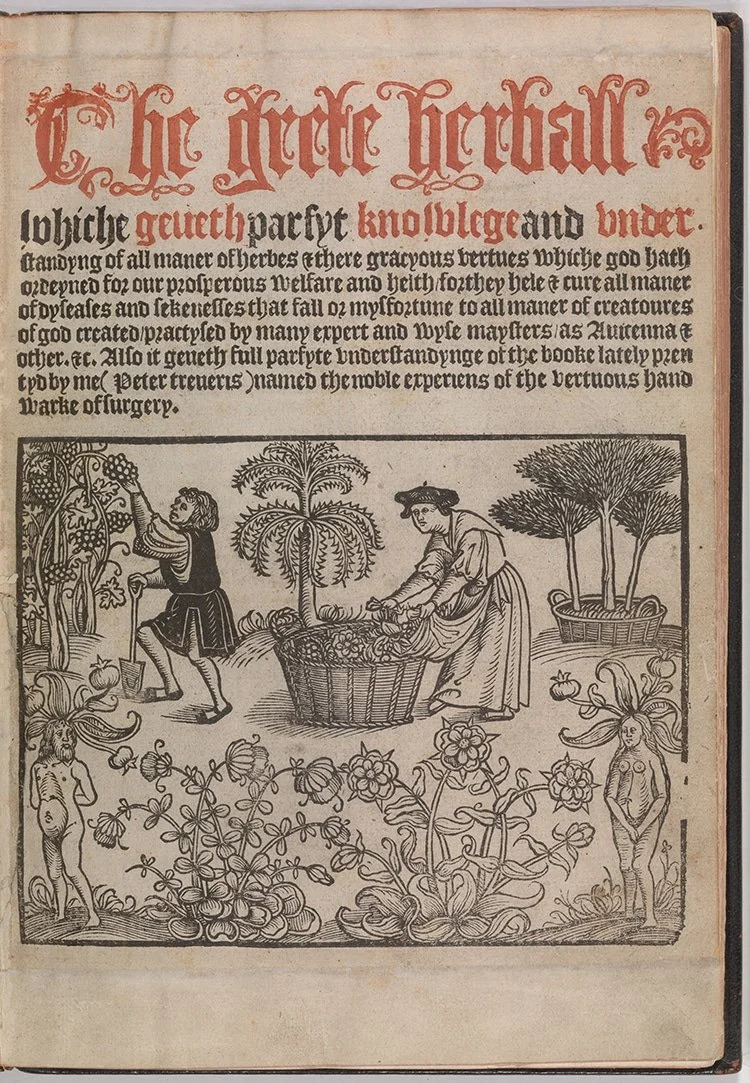
Photo and Caption Courtesy of My Modern Met: Title page of “The Grete Herball” by Peter Treveris, printed in London in 1526 and illustrated with woodcuts.
Resources
Frisch, K.J., Unwin, M.M., & Saunders, G.W. “Name that plant! Overcoming plant blindness and developing a sense of place using science and environmental education.” The inclusion of environmental education in science teacher education, pp. 143-157. Editors: Bodzin, A.M., Klein, B.S., & Weaver, S. 2010.
https://www.historyextra.com/period/medieval/how-when-why-did-we-start-calling-medieval-era-name/
https://strangehorizons.com/wordpress/non-fiction/articles/the-medieval-agricultural-year/
Sabatini, S. (1994). Women, Medicine and Life in the Middle Ages (500-1500 AD). American Journal of Nephrology, 14(4–6), 391–398. https://doi.org/10.1159/000168754