What happens when knowledge about plants belongs to the wrong person?
Lately, I’ve been fascinated about how plants have been used in the Middle Ages. It’s impossible to explore this history without wondering how witches play into the history and folklore that was so prevalent during that time. Witch hunting was also a pretty popular pastime during the Medieval period, and I’ve seen an estimate of about 30,000 executions between 1300-1800 (1). Since it’s October, and All Hollow’s Eve is approaching, I felt it appropriate to write about witches and their relationship with plants.
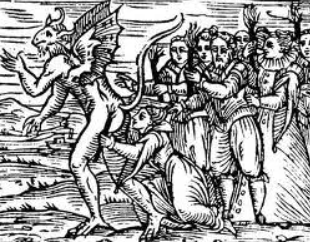
Photo courtesy of Medievalists.net
But first, what is a witch? Is she an ugly, green-faced monster who melts when splashed with water? Is she a mysterious woman who lives deep in the woods, situated in a humble cottage (the ideal vibe)? History says she heals the sick, casts curses and spells, and dances with the devil. The occult and the belief in magic has existed for centuries and has been practiced in ancient Egypt, Greece, and Rome. In the Middle Ages, the popularity of alchemy began to grow, and the pursuit of immortality and the Philosopher's Stone began to take root. During this time, a darker pall began to be cast over magic and occult beliefs. Witchcraft soon became considered a rejection of Christianity and an endearment to the devil, a belief that has persisted with time (2).
Ultimately, the figure we now know today as a witch stemmed from many different places, beliefs, and histories. There isn’t one straightforward answer to how or where the concept of witch originated from, but rather, it’s a composite that was developed over centuries. Witchcraft stemmed from beliefs in the occult and magic and older ideas about women, sin, sexuality, and power. Witchcraft was seen as harmful magic. As Christianity began to take hold, we can examine the witch as she relates to Eve. Eve was the one tempted by the serpent, who ate the forbidden fruit, who enticed Adam to indulge in the apple. This isn’t just a story about a woman’s disobedience, but rather, a belief in women’s susceptibility to temptation, their natural aptitude for deception, and moral weakness (3). Notice that Eve first disobeyed and deceived through a plant, in a garden called Eden.
However, a witch isn’t just someone who performs magic. Her power comes from the wrong source. The witch becomes the inversion of the good Christian woman. She is not obedient, chaste, humble, and submissive. A witch is disobedient, sexually transgressive, proud, and rebellious. When we see witches portrayed as old, ugly, and warty, she is again the inversion of the Christian woman. She is the negative portrayal of womanhood, the anti-feminist portrayal of what a good, Christian woman should be.
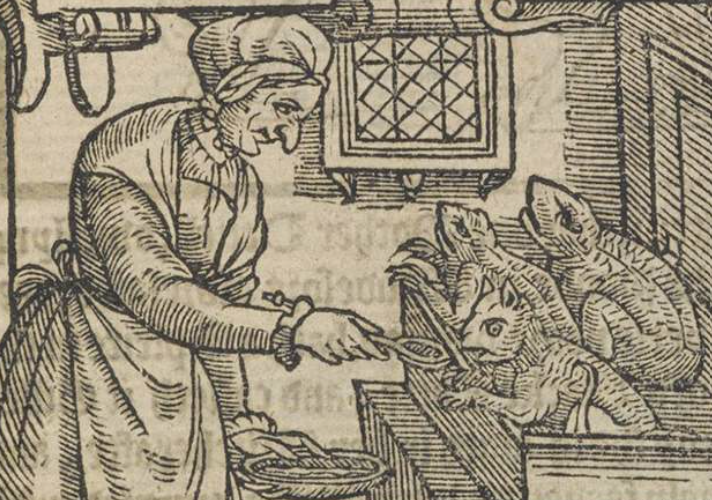
Photo Courtesy of English Heritage, https://www.english-heritage.org.uk/learn/histories/journey-into-witchcraft-beliefs/
But let's be clear. Men were also accused of witchcraft. Approximately 80% of those accused in European witch hunts were women, but that leaves 20% of men being incriminated (3). Thousands of individuals were accused of witchcraft during that time, so that’s not an insignificant amount of men. The belief of witchcraft and magic did not begin with the belief in female witches. It transformed over time to be pointed primarily at women because of their believed susceptibility to deception and moral weakness.
If at this point, you’re feeling a little angry, just know I’m right with you.
Women were at one point the informal keepers of lots of important, practical knowledge. Women were intimately involved with childbirth, home healing, food preparation and preservation, childcare, menstruation, gardening, and death. Women had a deep familiarity with plants and the human body. This held a certain power and legitimacy within the culture, and because people didn’t fully understand how plants healed, it slowly became treated with suspicion.
Also during this time, if you’ve read my other essays, you’ll remember that during the Middle Ages, a more formal medicinal practice began to establish. Men began to create formal pathways to medical practice that excluded women almost entirely. We begin to see a rupture, where certain kinds of knowledge are legitimate and other kinds are dangerous. When knowing plants became witchcraft.
As shared in the paper Green Magic and Gendered Knowledge, author Abraham Vila Pena shares, “the historical witch exists at the intersection of medicine, religion, and magic, often condemned not for her ignorance but for her dangerous wisdom” (4, p. 87). Even written in Shakespear’s Macbeth, the three witches knew hidden, mystical knowledge about plants, and that theme persists even today. Witches are often known as the keepers of forgotten knowledge, and feminism highlights the witch as part of the resistance. As Pena articulates, “[plants] operate as charged symbols of contested knowledge and social resistance” (p. 86). It’s fascinating that in many stories we hear today about witches, they are sought for their knowledge yet feared for their power.
Today, we conjure many images of the witch. It seems that modern herbalism has reclaimed the image of the witch, sometimes sincerely and sometimes commercially. While the spooky folklore is fun, I’d much rather envision the witch as a strong, knowledgeable woman, who knows plants, finds healing in nature, and supports her family and community through the natural world.
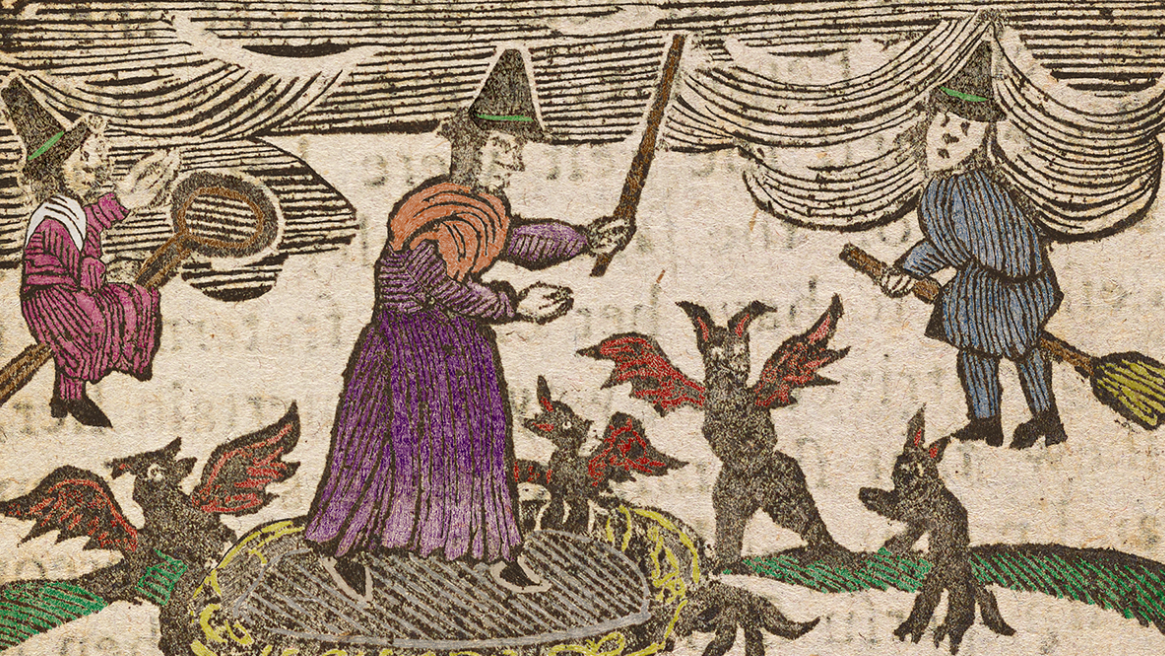
Photo Courtesy of the University of Illinois, https://news.illinois.edu/rare-book-and-manuscript-library-event-explores-history-of-witchcraft/