Author’s Note: this was originally published in the Carlton County Extension newsletter, so the format and content differs from other essays on this site.
————————————
I spent the better part of last summer battling non-native plants: stinging nettle, Canada thistle, and a field of tansies, just to name a few. Instead of going into battle with my usual disdain, I began to approach the task with curiosity.
I learned, for example, that tansy (Tanacetum vulgare) was brought to the US hundreds of years ago as an integral medicinal herb, treating everything from gout to intestinal worms. In medieval texts, the tansy was believed to ward off the plague and was so important that it was brought to the New England Plymouth colony by John Winthrop Jr. in 1631 (USDA.gov). It quickly escaped cultivation, and its voracious spreading habit was even noted in texts from the early 1800s. Now, you can see tansies most commonly in old farm fields, ditches, and disturbed areas. As we come out of the spooky season, think of tansies as the ghosts of old farm fields.
Filling a Gap
Disturbed and over-worked soil is where you will see many invasive weeds such as tansy, Canada thistle, and Queen Anne’s lace. All of these plants thrive in full to partial sun, in open fields, prairies, and ditches. Disturbed sites, where people have shifted and exposed soil, leave a gap where non-native plants can sneak in.
What’s interesting about non-natives, is that they have a strong relationship with humans. It’s often not mutual, but invasives just love us. After all, we brought them overseas, often intentionally for medicine or beauty, and at one point we tended and cared for them. These plants aren’t inherently bad, many hold value to humans, we just don’t see it, need it, or know it anymore. If you’re interested in learning more about our relationship to plants, I write ethnobotanical essays on my site, goodrootsfamilyed.com.
“What’s interesting about non-natives, is that they have a strong relationship with humans.”
Old farm fields are the perfect disturbed areas for our former friends. There are a few general reasons why non-natives grow more prolifically in these areas than their native counterparts. Non-native plants can exploit the excess nitrates in old farm fields better than native plants (NIH). Both invasives and non-natives can colonize old fields, of course. My field is filled with goldenrod, which also takes advantage of excess soil nutrients and open areas. Invasives just tend to have the upper hand.
This is in part because invasives also have less natural predators. They can spread so aggressively because there isn’t much that can naturally keep them in-check. And if you examine invasive species’ growth habits, you will also notice they grow in dense stands, making it near impossible for other plants to gain a foothold. I will often notice that invasives grow in dense drifts across open fields. We have created the perfect habitats for our non-native ex-friends, and it often takes human intervention to correct the landscape.
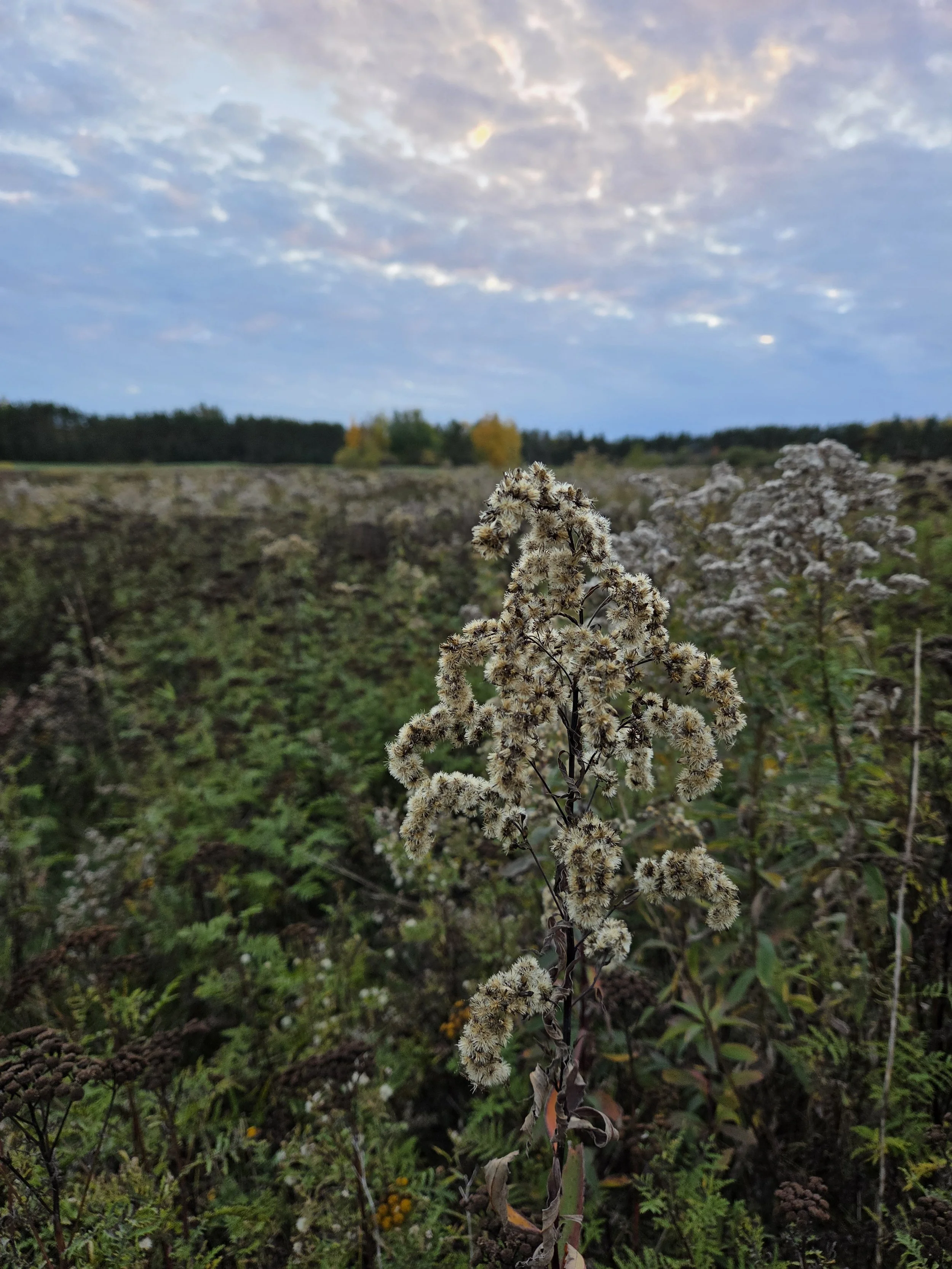
Photo of goldenrod gone to seed in an old farm field. Below, are the deep-brown seed heads of invasive tansies.
Non-Natives in the Garden
Invasives spread in many different ways, depending on the plant. We carry invasive plants on our vehicles (notice the amount of invasives on our roadsides, especially along major highways), through ornamental plant trade, and from our shoes and clothing (NPS). Once invasives take hold, as many of you know, the battle begins. They often take hold in our gardens simply because the soil is available. Think of it as a disturbed area, we expose and turn the soil, uncovering a seed bank that has been lying in wait for ages. Or, we are exposing the soil for a seed that just happens to be floating on by.
So what can we do about it? First, get a soil test if you haven’t already. An imbalance or excess of nutrients should be amended to minimize weed pressure and grow healthy plants. Second, cover exposed soil. Layering cardboard and mulching deeply minimizes the risk of one of our ex-friends dropping by without invitation. Awkward. Lastly, pulling weeds often and early, and preventing flowering can help eradicate invasives.
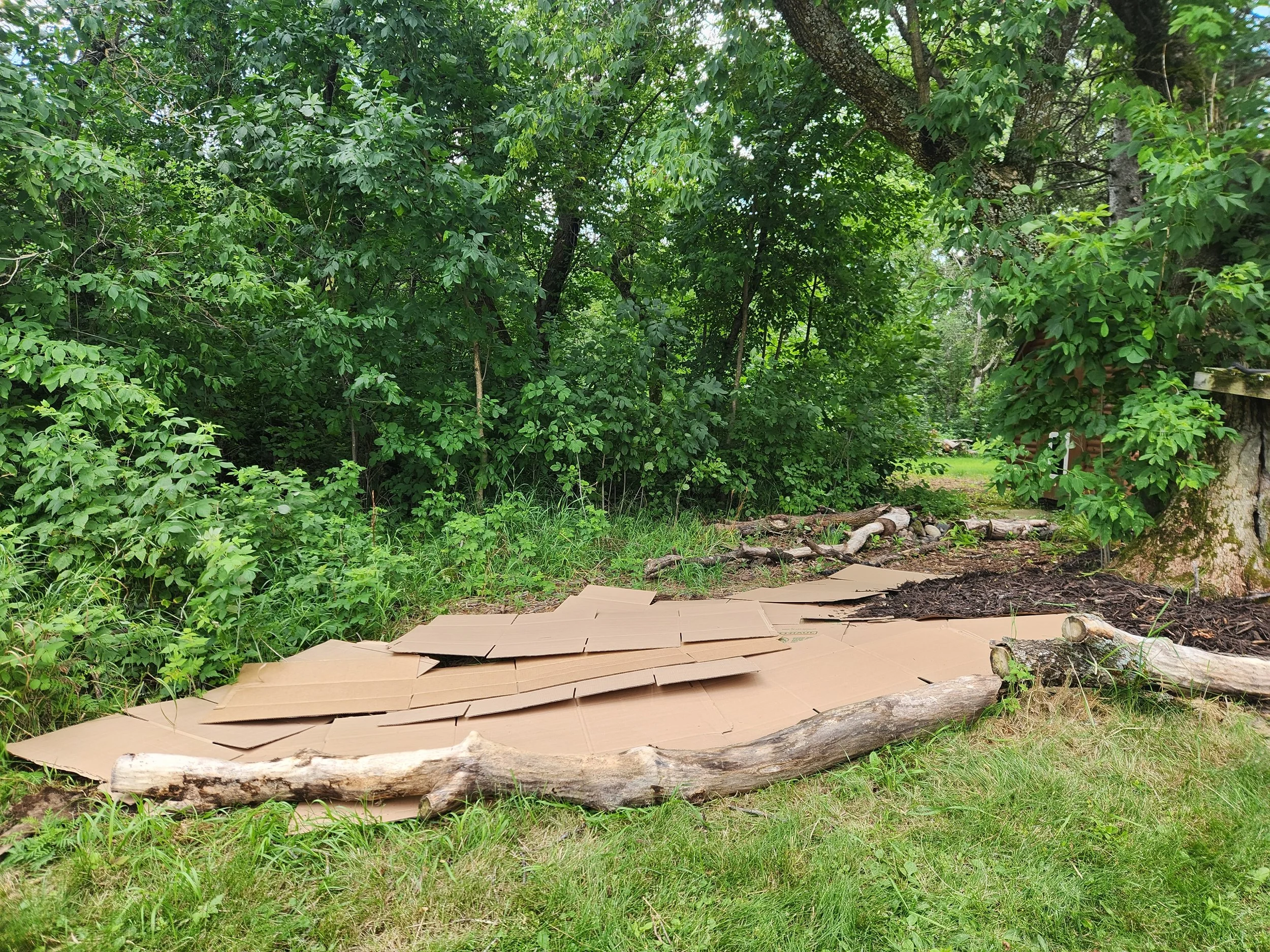
Several layers of cardboard were placed in the garden bed, then a thick layer of mulch was applied.
In Closing
It can often feel like an unending battle of invasive plant removal. If you have a particular invasive, it can be helpful to research the plant to understand its life cycle and growth habits, so you can more effectively eradicate it. There are plenty of resources online from your local Extension Office and you can always reach out to a Master Gardener!